Building credit from scratch can feel like a frustrating paradox. Lenders want to see a credit history before approving you for loans or credit cards, but how do you create a credit history when nobody is willing to give you credit in the first place?
The good news is that millions of people start with no credit every year and successfully build strong credit profiles. Whether you’re a student, a young adult entering the workforce, a recent immigrant, or simply someone who has never used credit before, there are proven ways to establish and grow your credit score.
In this comprehensive guide, you’ll learn how to build credit from scratch, avoid common mistakes, and create a strong financial foundation that can help you qualify for better loans, lower interest rates and greater access to financial opportunities in the future.
Table of Contents
Why Building Credit Matters
Credit affects more than just your ability to borrow money.
A strong credit profile can help you:
- Qualify for credit cards and personal loans
- Get lower interest rates
- Secure better mortgage terms
- Rent an apartment more easily
- Access higher credit limits
- Reduce insurance costs in some regions
- Improve financial flexibility during emergencies
In many countries, lenders use credit scores to assess risk. The better your credit history, the more trustworthy you appear as a borrower.
Think of your credit history as your financial reputation. It tells lenders how responsibly you’ve managed borrowed money over time.
Understanding Credit Basics
Before learning how to build credit from scratch, it’s important to understand how credit works.
What Is a Credit Score?
A credit score is a numerical representation of your creditworthiness. Different countries use different scoring systems, but the concept remains the same.
Credit scores are generally based on factors such as:
| Factor | Importance |
| Payment History | Very High |
| Credit Utilization | High |
| Length of Credit History | Medium |
| Credit Mix | Medium |
| New Credit Applications | Medium |
The higher your score, the lower the perceived risk to lenders.
Step 1: Check Whether You Already Have Credit History
Many people assume they have no credit when they actually have some recorded history.
You may already have:
- Student loans
- Utility accounts
- Mobile phone contracts
- Authorized user accounts
- Previous financing arrangements
Start by obtaining your credit report from your country’s major credit bureaus.
Review the report carefully for:
- Existing accounts
- Errors or inaccuracies
- Unrecognized activity
If your report is completely blank, you’re truly starting from scratch.
Step 2: Apply for a Secured Credit Card
One of the fastest and safest ways to build credit from scratch is through a secured credit card.
What Is a Secured Credit Card?
A secured credit card requires a refundable security deposit.
For example:
- Deposit: $200
- Credit Limit: $200
The card functions like a regular credit card, but the deposit reduces risk for the issuer.
Why Secured Cards Work
Credit card issuers typically report your payment activity to credit bureaus.
As a result:
- On-time payments build positive history
- Responsible usage improves your credit profile
- You can eventually qualify for unsecured cards
Best Practices
- Use only 10%–30% of your limit
- Pay your balance on time every month
- Never miss a payment
- Keep the account open long term
also read: How to Improve Your Credit Score from 600 to 700 in 90 Days (Step-by-Step Guide)
Step 3: Become an Authorized User
This strategy can significantly accelerate your credit-building journey.
How It Works
A trusted family member or spouse adds you as an authorized user on their credit card account.
You may benefit from:
- Their payment history
- Their account age
- Their positive credit behavior
Example
Imagine your parent has:
- A credit card open for 10 years
- Perfect payment history
- Low credit utilization
Being added as an authorized user may help establish your credit profile faster.
Important Note
Only choose someone who manages credit responsibly. Their mistakes could affect your credit as well.
Step 4: Use a Credit Builder Loan
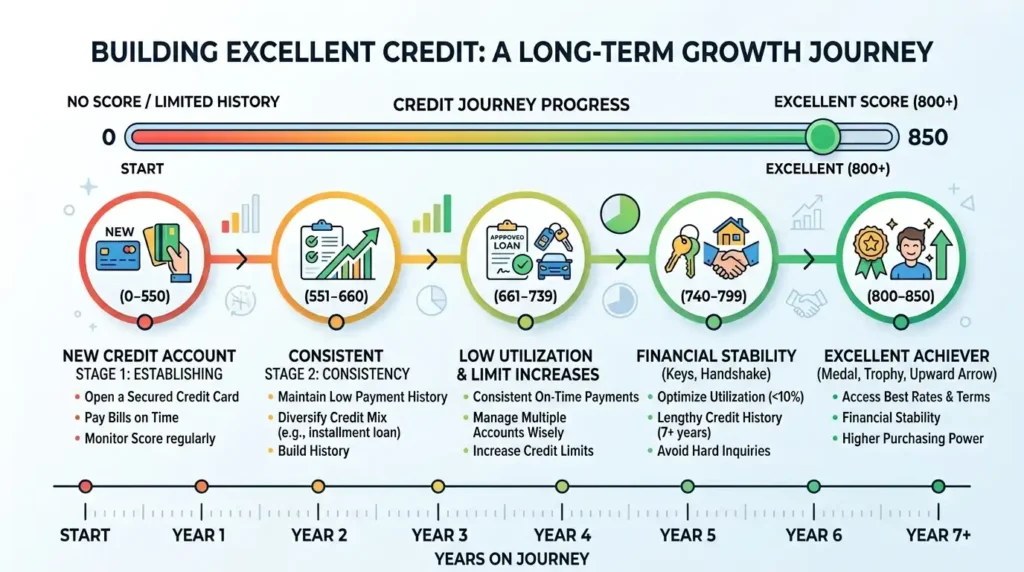
Credit builder loans are specifically designed for people with little or no credit history.
How Credit Builder Loans Work
Instead of receiving money upfront:
- The lender places funds into a savings account.
- You make monthly payments.
- Payments are reported to credit bureaus.
- After repayment, you receive the money.
This allows you to demonstrate responsible borrowing behavior without traditional lending risks.
Benefits
- Builds payment history
- Encourages savings habits
- Suitable for beginners
- Often easier to qualify for
Step 5: Pay Every Bill on Time
Payment history is often the most important factor in credit scoring models. Even one missed payment can damage a new credit profile.
Set Up Automatic Payments
Automation reduces the risk of forgetting due dates. Consider setting up:
• Credit card autopay
• Loan autopay
• Utility bill reminders
• Mobile banking alerts
Golden Rule
Never miss a payment. Consistency matters more than the amount spent.
Building credit takes patience, but understanding how to build credit from scratch helps you follow the right steps without confusion or costly mistakes.
Step 6: Keep Credit Utilization Low

Credit utilization refers to how much of your available credit you’re using.
Formula
Credit Utilization = Current Balance ÷ Credit Limit × 100
Example
- Credit Limit: $1,000
- Balance: $200
Utilization = 20%
Experts generally recommend keeping utilization below 30%.
For the best results:
- Stay under 10%
- Pay balances early
- Avoid maxing out cards
Low utilization signals responsible credit management.
Step 7: Report Rent and Utility Payments
Many modern credit reporting systems now allow alternative payment data.
These may include:
- Rent payments
- Utility bills
- Phone bills
- Streaming services
Why This Helps
Many first-time credit builders already pay these bills regularly.
By reporting them, you may strengthen your credit profile without taking on additional debt.
This is especially useful for:
- Students
- Young professionals
- Renters
- New immigrants
Step 8: Avoid Applying for Too Many Accounts
When you’re learning how to build credit from scratch, it can be tempting to apply for multiple credit cards at once.
This can backfire.
Understanding Hard Inquiries
Each application may trigger a hard credit inquiry.
Too many inquiries can signal risk to lenders.
Smart Approach
Apply only for:
- One secured card
- One credit builder loan (if needed)
- Additional products only after establishing history
Quality beats quantity.
Step 9: Build a Long Credit History
Time plays a major role in credit building.
Unfortunately, there’s no shortcut.
Why Account Age Matters
Lenders like to see long-term responsible behavior.
Therefore:
- Keep older accounts open
- Avoid unnecessary closures
- Maintain positive payment records
Even a simple secured card can become a valuable asset if maintained for years.
Step 10: Monitor Your Credit Progress
Credit building isn’t a one-time event.
It’s an ongoing process.
What to Track
Monitor:
- Credit score changes
- New accounts
- Payment history
- Credit utilization
- Errors and fraud
Many banks and financial service providers now include free credit monitoring features as part of their offerings. Regularly reviewing your credit information can help you detect errors, monitor your progress, and protect your credit profile from unexpected issues.
Common Mistakes That Slow Credit Growth
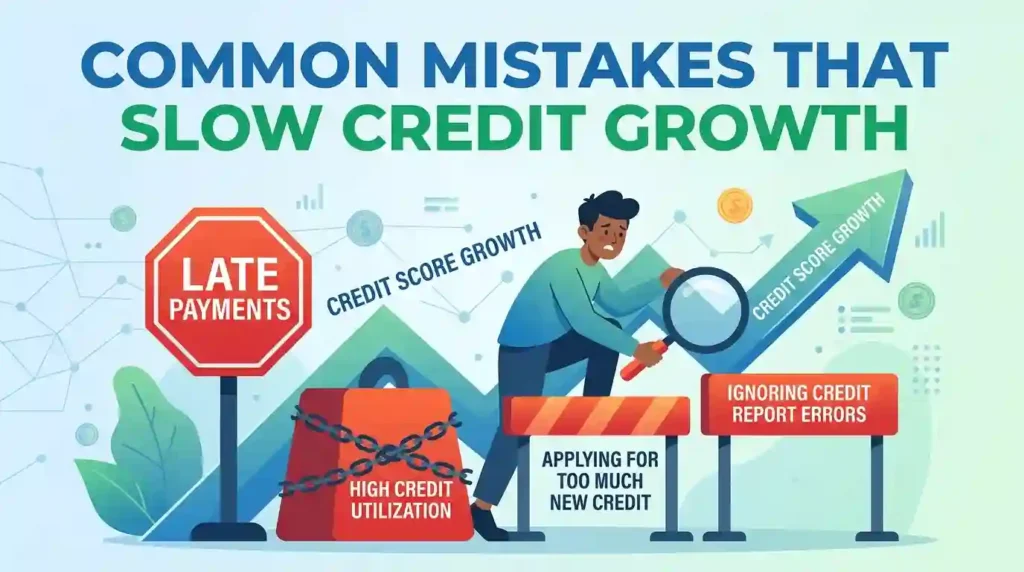
Many beginners learning how to build credit from scratch often make simple mistakes that can slow their progress or damage their credit profile early on.
Avoid these mistakes:
Missing Payments
A single late payment can remain on reports for years.
Maxing Out Credit Cards
High utilization can lower your score significantly.
Applying for Too Much Credit
Multiple inquiries can make lenders cautious.
Closing Old Accounts
Older accounts help strengthen your credit age.
Ignoring Credit Reports
Errors happen more often than people realize.
Review reports regularly.
A Real-World Example of Building Credit from Scratch
Let’s look at a realistic scenario.
Sarah’s Credit Journey
Sarah is 22 years old and has never used credit before.
Month 1
- Opens secured credit card
- Deposits $300
- Uses $30 monthly
Month 3
- Makes all payments on time
- Keeps utilization below 10%
Month 6
- Becomes authorized user on parent’s account
Month 12
- Applies for entry-level unsecured card
- Approved
Month 24
- Maintains perfect payment history
- Builds strong credit profile
Sarah didn’t use complicated strategies.
She simply followed consistent habits.
That’s often the key to successful credit building.
How Long Does It Take to Build Credit from Scratch?
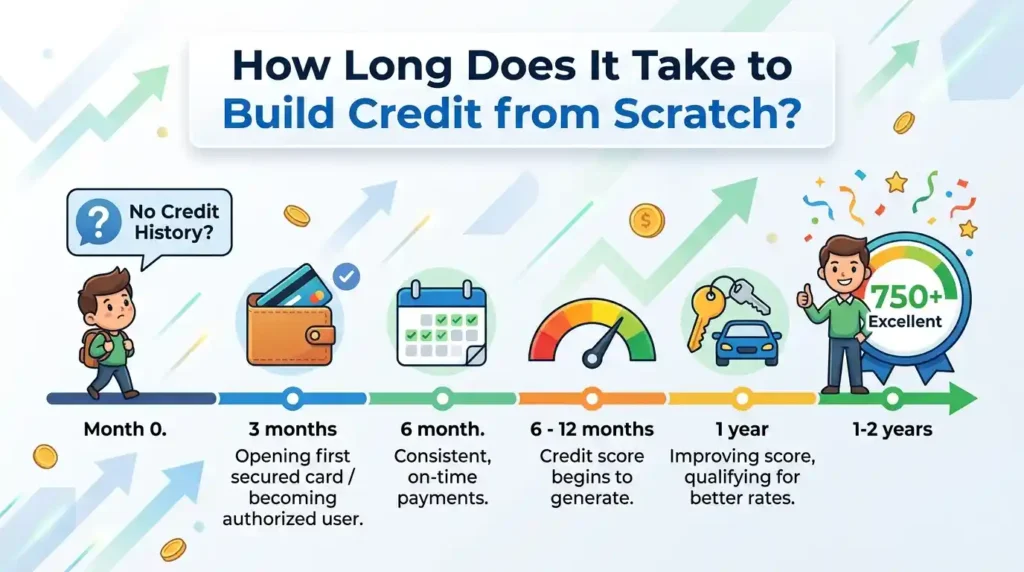
The timeline varies depending on your activities and reporting practices.
Typical Timeline
| Time Period | Expected Progress |
| 1–3 Months | Credit activity begins |
| 3–6 Months | Initial score may appear |
| 6–12 Months | Stronger credit profile develops |
| 1–2 Years | Good credit becomes achievable |
| 3+ Years | Excellent credit becomes possible |
Patience and consistency are essential.
Credit building is a marathon, not a sprint.
Advanced Tips to Build Credit Faster
Once you’ve established basic credit, consider these strategies.
Increase Credit Limits
Higher limits can lower utilization ratios.
Diversify Credit Types
A mix of:
- Credit cards
- Installment loans
- Auto loans
can strengthen your profile.
Keep Balances Low
Low balances show financial discipline.
Continue Monitoring Reports
Identify opportunities and issues quickly.
The Psychology of Good Credit Habits
Many people view credit as extra spending money.
This mindset often creates problems.
Instead, think of credit as:
A financial reputation-building tool.
When used responsibly:
- It opens opportunities
- Reduces borrowing costs
- Improves financial flexibility
Successful credit builders focus on consistency rather than quick results.
Trusted Credit Resources (E-E-A-T)
• Free credit reports → https://www.annualcreditreport.com
• Consumer protection guidance → https://www.consumerfinance.gov
• Credit bureaus → Experian, Equifax, TransUnion
Frequently Asked Questions (FAQs)
1. What is the fastest way to build credit from scratch?
The fastest way to learn how to build credit from scratch is to start with a secured credit card or credit-builder loan, make all payments on time, and keep your credit utilization below 30%. Becoming an authorized user on a responsible person’s credit card can also help you build credit faster by adding positive payment history to your report. To speed up results, avoid missed payments, limit new credit applications, and consistently use your credit account in a responsible way. Most people begin seeing a credit score within 3 to 6 months when these habits are followed consistently.
2. How long does it take to get a credit score?
In many cases, a credit score can appear within 3–6 months after credit activity is reported consistently.
3. Can I build credit without a credit card?
Yes. Credit builder loans, reported rent payments, and certain utility reporting programs can help establish credit history.
4. Does checking my own credit score hurt my credit?
No. Personal credit checks are usually considered soft inquiries and do not impact your score.
5. What credit utilization ratio is best?
While staying below 30% is generally recommended, many experts suggest keeping utilization below 10% for optimal results.
6. Can I build credit if I have no income?
Yes, it is possible to start building credit without a traditional source of income. Options such as becoming an authorized user on a family member’s credit card or using certain secured credit products can help you establish a credit history. However, when applying for new credit accounts, most lenders will typically review your ability to make payments and may require proof of income or other financial resources.
7. Should I close my first credit card after getting a better one?
Generally, keeping your oldest account open can benefit your credit history length, provided there are no significant fees.
8. Do you need income to start building credit from scratch?
No, you do not always need income to understand how to build credit from scratch, but most lenders will eventually require proof of income when you apply for credit products. You can still begin building credit by becoming an authorized user on someone else’s credit card, using a secured credit card, or enrolling in a credit-builder loan. These options help establish a credit history even with little or no income. However, having some form of income or financial support improves your chances of approval and helps you manage repayments responsibly.
Final Thoughts
Learning how to build credit from scratch is one of the most valuable financial skills you can develop. While building credit takes time, the process doesn’t have to be complicated. By opening the right accounts, paying every bill on time, keeping your credit utilization low, and monitoring your progress regularly, you can build a strong credit foundation that supports your financial goals for years to come.
Remember, excellent credit isn’t built through shortcuts or quick fixes—it’s the result of consistent, responsible financial habits practiced over time. Start where you are, stay patient, and focus on making smart credit decisions. Every positive step you take today can bring you closer to a stronger credit profile and greater financial opportunities in the future.
Also Read: Discover It Secured Credit Card: Requirements, Deposit, Benefits & How to Get Approved